ADVANCED TRADING STRATEGIES
Multi-Strategy
Algorithmic Trading for
Smarter Market Execution
Our cutting edge algorithmic trading strategies are built to adapt to market conditions, manage risk, and deliver consistent performance across Forex, Gold, and Crypto markets.

Proven Strategies
Adaptive to All Market Conditions
Backtested for Consistency
ADVANCED TRADING STRATEGIES
Multi-Strategy
Algorithmic Trading for
Smarter Market Execution
Our cutting edge algorithmic trading strategies are built to adapt to market conditions, manage risk, and deliver consistent performance across Forex, Gold, and Crypto markets.

Proven Strategies
Adaptive to All Market Conditions
Backtested for Consistency
Our 10 Core Trading Strategies
Core Trading
Each strategy is uniquely designed to capture opportunities and manage risk in any market condition.
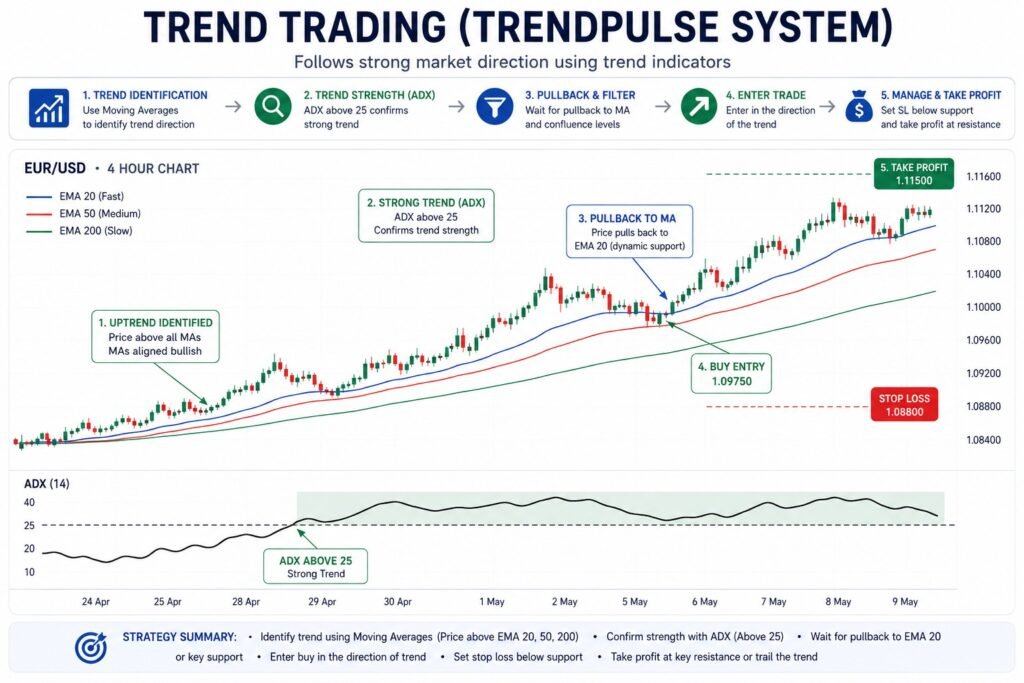
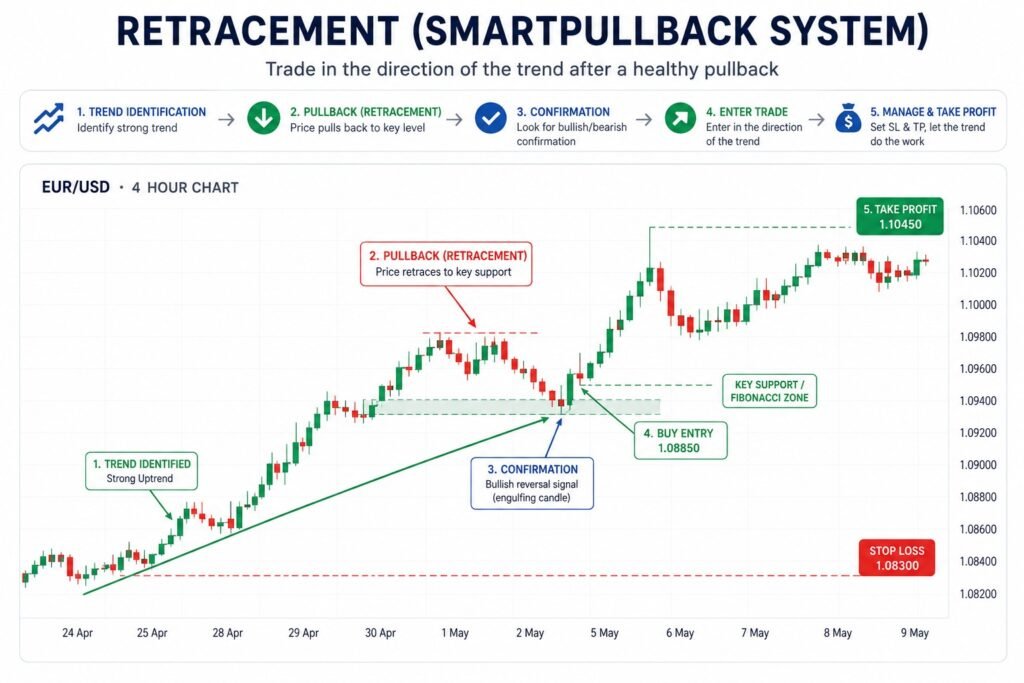
01 — Trend Following Strategy
- Identifies the primary market trend using Moving Averages and ADX.
- Enters during controlled pullbacks rather than chasing price.
- Uses multiple trend and momentum filters to reduce false signals.
- Confirms trend strength before opening a position.
- Uses dynamic Stop Loss based on market volatility.
- Trailing logic helps protect profits as the trend develops.
- Best suited for strong, directional markets.
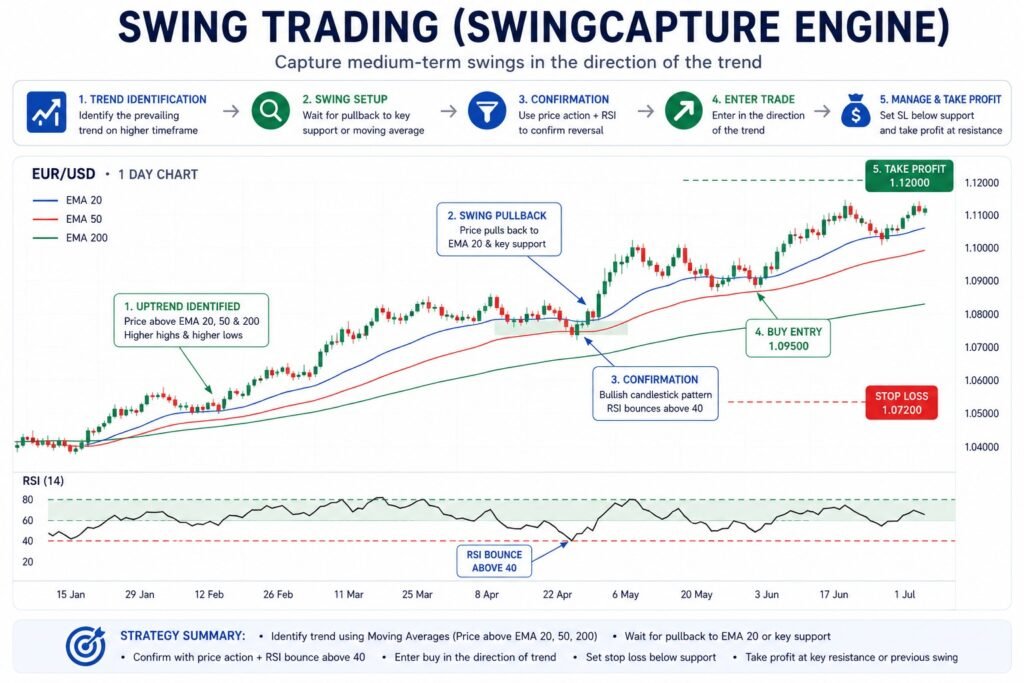
02 — Swing Trading (Swing Capture Engine)
- Identifies major support and resistance zones.
- Detects swing highs, swing lows, and market structure.
- Enters after confirmation near important price levels.
- Filters weak setups using momentum and volatility conditions.
- Targets medium-term price movements with defined risk.
- Avoids excessive trading during unclear market conditions.
- Best suited for traders looking for fewer, higher-quality setups.
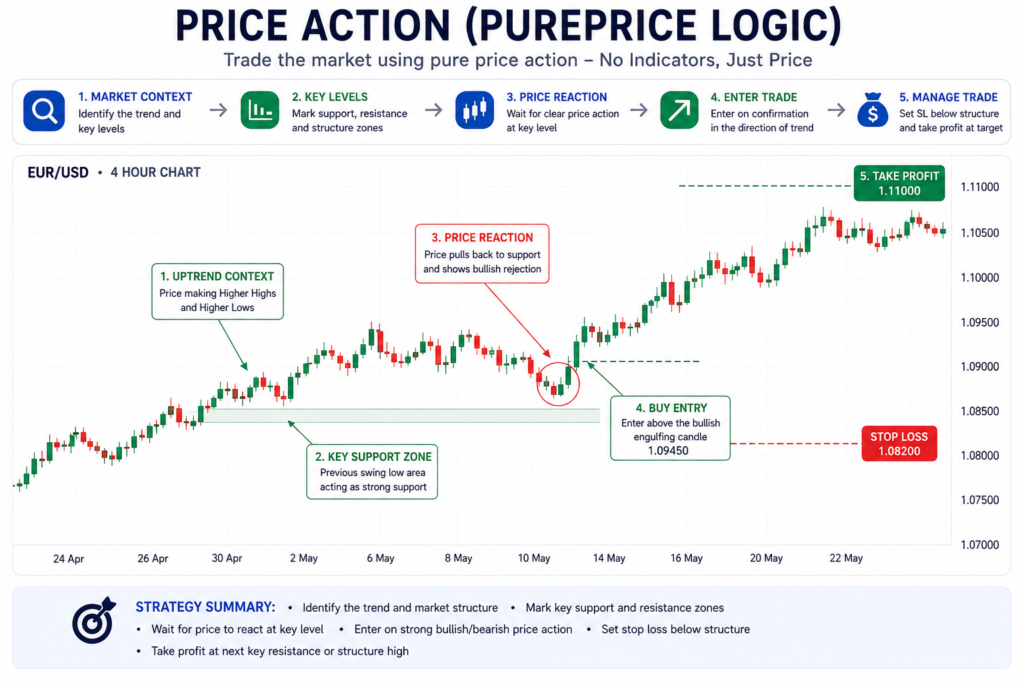
03 — Price Action (Pure Price Logic)
- Analyzes raw price movement without relying heavily on lagging indicators.
- Detects candlestick patterns such as engulfing candles and pin bars.
- Identifies rejection and reversal behavior at key levels.
- Uses market structure to determine bullish and bearish bias.
- Confirms entries using candle closing behavior.
- Applies strict risk controls around invalidation levels.
- Best suited for markets with clear price structure.
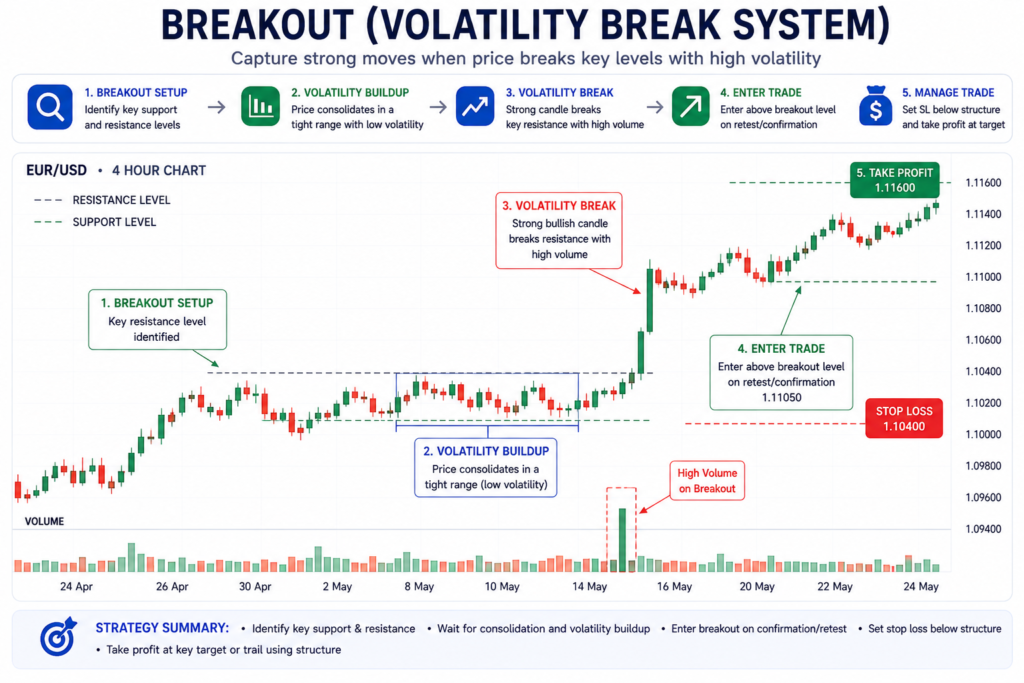
04 —Breakout (Volatility Break System)
- Detects consolidation, compression, ranges, and chart structures.
- Identifies potential breakout levels before price expansion.
- Uses volatility and volume confirmation to validate breakouts.
- Helps avoid false breakouts through multi-layer filters.
- Can identify momentum expansion immediately after consolidation.
- Uses breakout-based Stop Loss and profit management.
- Best suited for markets transitioning from low to high volatility.
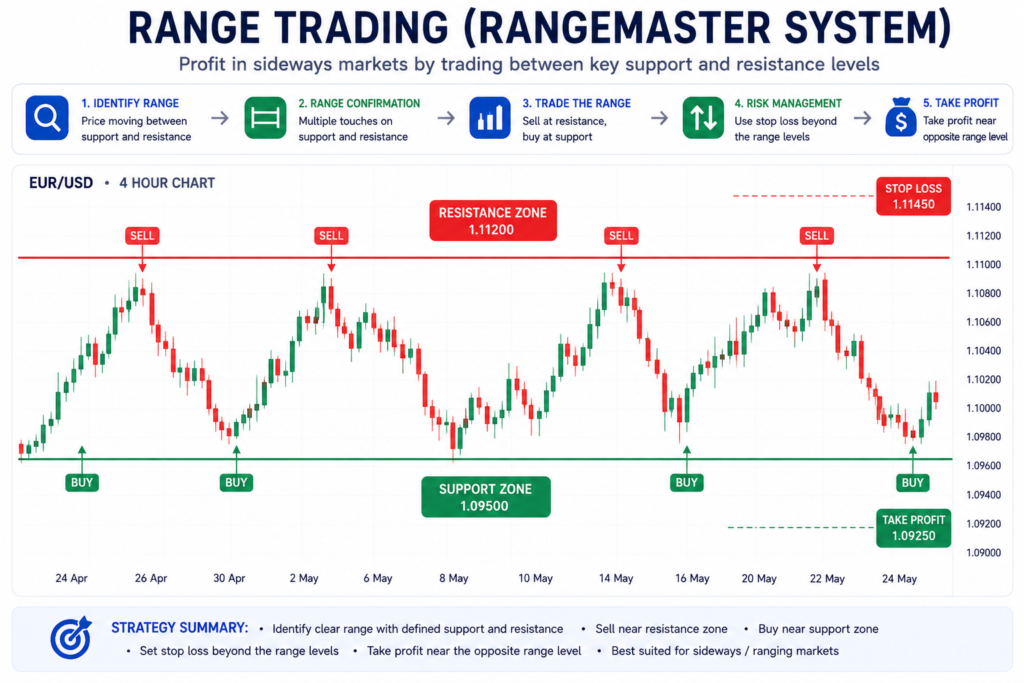
05 —Range Trading (RangeMaster System)
- Identifies clearly defined sideways trading ranges.
- Buys near established support and sells near resistance.
- Uses RSI and Bollinger Bands for additional confirmation.
- Avoids entries when a strong directional trend is developing.
- Uses range boundaries to define risk and invalidation.
- Takes profits progressively near opposing levels.
- Best suited for stable, low-trend market conditions.
01 — Trend Following Strategy
- Identifies the primary market trend using Moving Averages and ADX.
- Enters during controlled pullbacks rather than chasing price.
- Uses multiple trend and momentum filters to reduce false signals.
- Confirms trend strength before opening a position.
- Uses dynamic Stop Loss based on market volatility.
- Trailing logic helps protect profits as the trend develops.
- Best suited for strong, directional markets.
02 — Swing Trading (Swing Capture Engine)
- Identifies major support and resistance zones.
- Detects swing highs, swing lows, and market structure.
- Enters after confirmation near important price levels.
- Filters weak setups using momentum and volatility conditions.
- Targets medium-term price movements with defined risk.
- Avoids excessive trading during unclear market conditions.
- Best suited for traders looking for fewer, higher-quality setups.
03 — Price Action (Pure Price Logic)
- Analyzes raw price movement without relying heavily on lagging indicators.
- Detects candlestick patterns such as engulfing candles and pin bars.
- Identifies rejection and reversal behavior at key levels.
- Uses market structure to determine bullish and bearish bias.
- Confirms entries using candle closing behavior.
- Applies strict risk controls around invalidation levels.
- Best suited for markets with clear price structure.
04 —Breakout (Volatility Break System)
- Detects consolidation, compression, ranges, and chart structures.
- Identifies potential breakout levels before price expansion.
- Uses volatility and volume confirmation to validate breakouts.
- Helps avoid false breakouts through multi-layer filters.
- Can identify momentum expansion immediately after consolidation.
- Uses breakout-based Stop Loss and profit management.
- Best suited for markets transitioning from low to high volatility.
05 —Range Trading (RangeMaster System)
- Identifies clearly defined sideways trading ranges.
- Buys near established support and sells near resistance.
- Uses RSI and Bollinger Bands for additional confirmation.
- Avoids entries when a strong directional trend is developing.
- Uses range boundaries to define risk and invalidation.
- Takes profits progressively near opposing levels.
- Best suited for stable, low-trend market conditions.
06 — Scalping QuickTrade Engine
- Targets short-term opportunities in highly liquid markets.
- Analyzes rapid price movements and short-term momentum.
- Uses multiple confirmations before entering a trade.
- Filters trades based on spread, volatility, and market conditions.
- Uses predefined Stop Loss and Take Profit levels.
- Fast trade management helps limit exposure to sudden reversals.
- Best suited for liquid markets with sufficient intraday volatility.
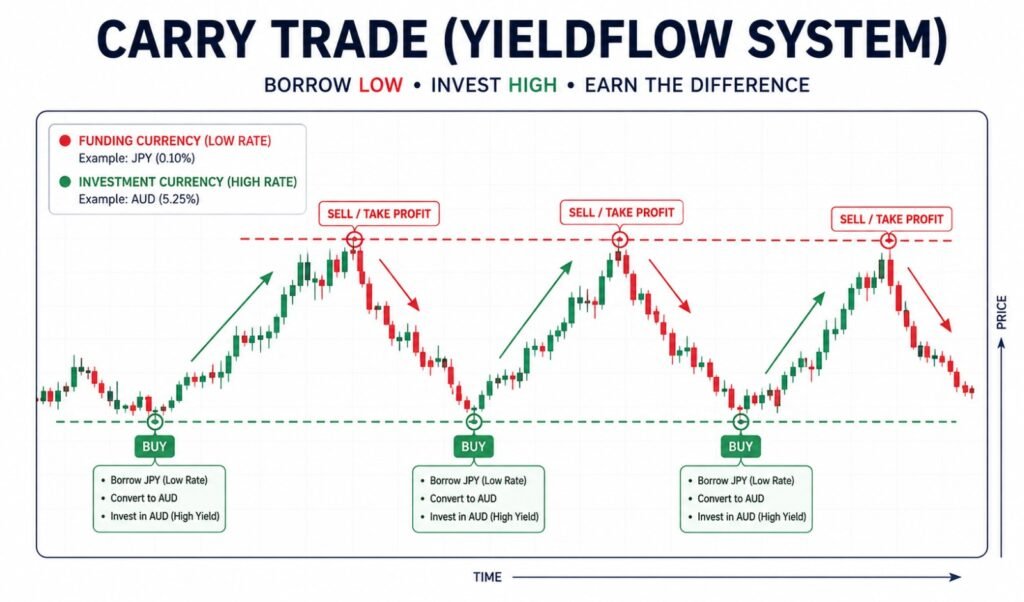
07 — Carry Trade Strategy
- Identifies opportunities from interest-rate differentials.
- Evaluates the cost and potential benefit of holding positions over time.
- Considers swap, funding costs, and broader market conditions.
- Uses fundamental and macroeconomic signals for directional bias.
- Filters trades during periods of significant monetary-policy uncertainty.
- Incorporates position sizing and drawdown controls.
- Best suited for longer-term strategies and favorable interest-rate environments
08 — News Trading Strategy
- Monitors scheduled high-impact economic events.
- Identifies markets likely to experience increased volatility.
- Uses event-driven signals to detect potential trading opportunities.
- Applies volatility and spread filters around major announcements.
- Controls position size during periods of extreme price movement.
- Uses predefined risk parameters to manage sudden reversals.
- Best suited for highly liquid markets around major economic events.
9 - Martingale Strategy RecoveryGrid Engine
- Loss-Recovery Logic: Increases position size after a losing trade with the objective of recovering accumulated losses.
- Structured Entry: Uses predefined market-entry conditions rather than increasing exposure without a trading signal.
- Position Scaling: Applies a controlled position-sizing sequence instead of unlimited doubling.
- Market Filters: Can use trend, volatility, and range conditions to avoid unfavorable market environments.
- Recovery Target: Closes the trade sequence when the recovery objective and predefined profit target are reached.
- Maximum Levels: Limits the number of recovery steps to prevent uncontrolled exposure.
- Drawdown Protection: Uses maximum drawdown and account-level risk limits to stop a sequence when conditions become unfavorable.
10 - Averaging Strategy AverageEdge Engine
- Initial Entry: Opens the first position using a predefined base lot size and selected market conditions.
- Price-Based Averaging: Adds positions when price moves against the initial entry at predefined levels.
- Controlled Position Scaling: Uses a structured lot-sizing sequence instead of unlimited position increases.
- Average Price Calculation: Recalculates the combined average entry price after each additional position.
- Market Filters: Uses trend, volatility, support/resistance, and market-condition filters before adding positions.
- Exposure Control: Limits the number of entries, position size, total exposure, and maximum drawdown.
- Recovery Target: Sets a predefined profit target based on the combined average entry price.
- Exit Management: Closes the position or basket when price reaches the recovery or target zone.
06 — Scalping QuickTrade Engine
- Targets short-term opportunities in highly liquid markets.
- Analyzes rapid price movements and short-term momentum.
- Uses multiple confirmations before entering a trade.
- Filters trades based on spread, volatility, and market conditions.
- Uses predefined Stop Loss and Take Profit levels.
- Fast trade management helps limit exposure to sudden reversals.
- Best suited for liquid markets with sufficient intraday volatility.
07 — Carry Trade Strategy
- Identifies opportunities from interest-rate differentials.
- Evaluates the cost and potential benefit of holding positions over time.
- Considers swap, funding costs, and broader market conditions.
- Uses fundamental and macroeconomic signals for directional bias.
- Filters trades during periods of significant monetary-policy uncertainty.
- Incorporates position sizing and drawdown controls.
- Best suited for longer-term strategies and favorable interest-rate environments
08 — News Trading Strategy
- Monitors scheduled high-impact economic events.
- Identifies markets likely to experience increased volatility.
- Uses event-driven signals to detect potential trading opportunities.
- Applies volatility and spread filters around major announcements.
- Controls position size during periods of extreme price movement.
- Uses predefined risk parameters to manage sudden reversals.
- Best suited for highly liquid markets around major economic events.
9 - Martingale Strategy RecoveryGrid Engine
- Loss-Recovery Logic: Increases position size after a losing trade with the objective of recovering accumulated losses.
- Structured Entry: Uses predefined market-entry conditions rather than increasing exposure without a trading signal.
- Position Scaling: Applies a controlled position-sizing sequence instead of unlimited doubling.
- Market Filters: Can use trend, volatility, and range conditions to avoid unfavorable market environments.
- Recovery Target: Closes the trade sequence when the recovery objective and predefined profit target are reached.
- Maximum Levels: Limits the number of recovery steps to prevent uncontrolled exposure.
- Drawdown Protection: Uses maximum drawdown and account-level risk limits to stop a sequence when conditions become unfavorable.
10 - Averaging Strategy AverageEdge Engine
- Initial Entry: Opens the first position using a predefined base lot size and selected market conditions.
- Price-Based Averaging: Adds positions when price moves against the initial entry at predefined levels.
- Controlled Position Scaling: Uses a structured lot-sizing sequence instead of unlimited position increases.
- Average Price Calculation: Recalculates the combined average entry price after each additional position.
- Market Filters: Uses trend, volatility, support/resistance, and market-condition filters before adding positions.
- Exposure Control: Limits the number of entries, position size, total exposure, and maximum drawdown.
- Recovery Target: Sets a predefined profit target based on the combined average entry price.
- Exit Management: Closes the position or basket when price reaches the recovery or target zone.
How Our System Works
Our System
Our algorithm analyzes multiple market factors and executes high probability trades with precision.
01. Market Analysis
Analyze global markets, price action, trends, volatility, liquidity, volume, technical indicators, and market conditions.
02. Strategy & Signal Generation
Combine market analysis with news and fundamental analysis to identify, validate, and rank potential trading opportunities.
03. Strategy Execution
Execute qualified trades according to the selected strategy, entry conditions, timing, and execution parameters.
04. Trade Management
Manage open positions through dynamic risk controls, stop-loss/take-profit logic, position sizing, and exit optimization.
05. Performance Tracking
Continuously monitor trade performance, risk metrics, strategy effectiveness, and results to identify areas for improvement.
01. Market Analysis
Analyze global markets, price action, trends, volatility, liquidity, volume, technical indicators, and market conditions.
02. Signal Generation
Combine market analysis with news and fundamental analysis to identify, validate, and rank potential trading opportunities.
03. Strategy Execution
Execute qualified trades according to the selected strategy, entry conditions, timing, and execution parameters.
04. Trade Management
Manage open positions through dynamic risk controls, stop-loss/take-profit logic, position sizing, and exit optimization.
05. Performance Tracking
Continuously monitor trade performance, risk metrics, strategy effectiveness, and results to identify areas for improvement.
Better Adaptability
Adapts to all market conditions
Higher Probability
High algorithmic strategies with strong logic
Risk Managed
Built-in risk controls to protect capital
Consistent Performance
Backtested strategies for consistent results